Peppers in 20-Liter Balcony Pots
Why ~20 L pots suit hot peppers and compact sweet peppers, with night-temperature fruit-set limits for USDA 6–8 balconies.
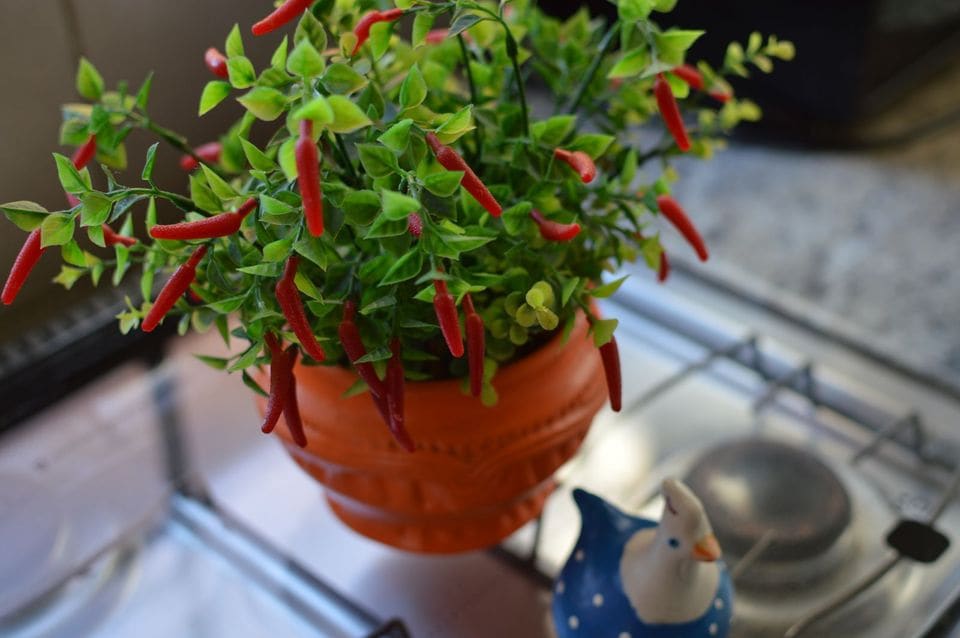
Photo: Caio / Pexels · free stock, attributed
Peppers earn rail space when nights finally stay warm — often later than salad greens on USDA 6–8 balconies. A ~20 L (≈5 gal) pot buffers a workday without constant wilt for most bush hot peppers. Smaller 10–12 L pots work for compact Thai types with strict watering; large plants stretch happier at 20–25 L. One plant per pot.
Compiled from common balcony edible-container practice. Days below are approximate from transplant of a healthy seedling in warm weather.
Cultivar sketch for pots
| Type | Days to harvest (approx.) | Pot volume | Notes |
|---|---|---|---|
| Jalapeño-type | 70–80 | 18–25 L | Thick walls; reliable in 6–8 summers |
| Cayenne-type | 70–80 | 18–22 L | Slim fruit; stake if windy |
| Thai hot types | 80–90 | 12–20 L | Compact; good for tighter rails |
| Hungarian wax / early types | 60–70 | 18–22 L | Useful when nights warm late |
| Compact sweet / lunchbox types | 60–75 | 15–25 L | Same culture; less heat |
Buy labeled seed or starts. Wet mix in a 20 L pot is heavy — use the weight tool before six of them line a rail.
Setup
- Drainable mix; no gravel layer.
- Crown at nursery depth.
- Stake at planting (stakes guide).
- Finger-test water at 5 cm; empty saucers in 30–60 minutes.
- Feed after establishment on a vegetable schedule (fertilizer).
Fruit set limits
Peppers stall when nights are cold or days spike into extreme heat. If flowers drop above ~32–35°C, add afternoon shade and keep mix from cycling bone-dry to flooded. Tap cages at midday to help pollen move in still enclosed balconies.
Harvest hot peppers at the color stage you want (green vs fully colored). Leaving every fruit forever slows new set on loaded plants — light thinning helps in small pots.
Compared with tomatoes
Peppers usually want warmer nights than tomatoes before they take off. Do not rush them outdoors beside early lettuce. Give each pepper its own pot — sharing a trough with basil only works if volume is oversized and water needs match. For support habits shared with other fruiting crops, see stakes and pinching.
Sources
- University of Minnesota Extension — Growing peppers
- Iowa State University Extension — Container vegetable gardening
- NCAT — Fruiting vegetables in containers