Stakes, Pinching, and Fruit Thinning for Balcony Crops
When to stake tomatoes and beans, what pinching actually does, and how light fruit thinning protects container plants on USDA 6–8 balconies.
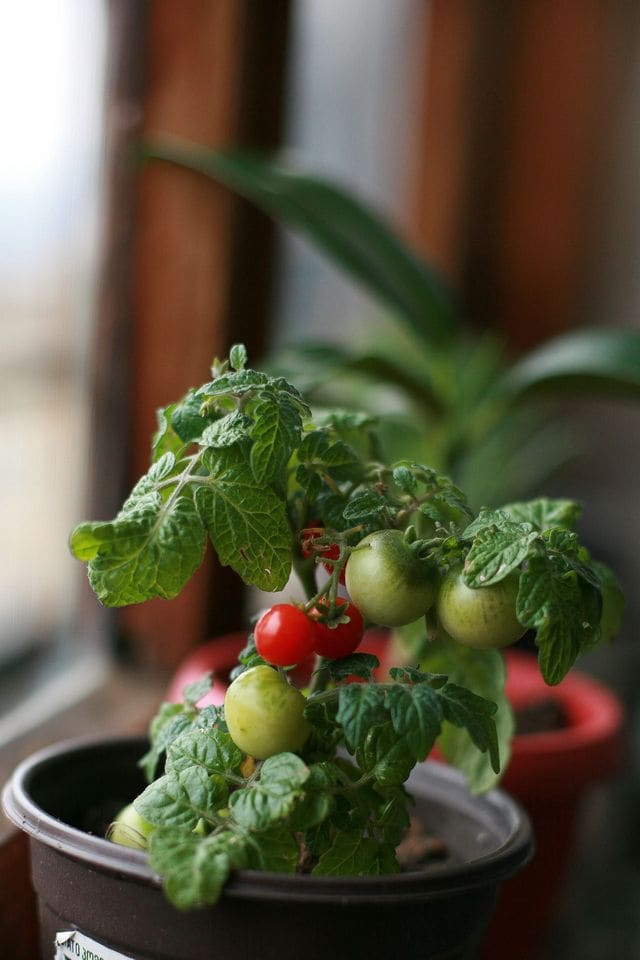
Photo: bacho nadiradze / Pexels · free stock, attributed
Fruit weight and wind tip pots long before nutrient charts matter. On temperate Northern Hemisphere urban balconies (USDA zones 6–8), install support the day you transplant, then use light pinching and thinning so a single container plant finishes ripe fruit instead of a pile of green balls. Hotter sites need earlier shade on stressed vines; colder sites may finish the last fruit indoors.
Compiled from common balcony edible-container practice.
Stake or cage at planting
| Crop | Support | Notes |
|---|---|---|
| Compact / determinate tomato | Cage or 1–2 stakes | Soft ties; retie as stems thicken |
| Indeterminate tomato (large pot) | Tall cage or stake + weave | Needs 25–40 L mix; see compact tomatoes for dwarfs |
| Bush beans | Optional low fence | Bush types rarely need tall poles |
| Pole beans / peas | Trellis or strings to a secure rail point | Check building rules before drilling |
| Pepper / eggplant | One stake per plant | Fruit and wind snap soft stems |
Drive stakes beside the root ball at potting — pushing a stake through established roots tears them. Soft cloth ties or stretch tape beat wire twist-ties that girdle stems by midsummer.
Pinching and suckers
Pinching removes a growing tip or side shoot so energy shifts. It is not a weekly haircut.
| Plant | Useful pinch | Avoid |
|---|---|---|
| Basil | Tip above a leaf pair when 15–20 cm tall | Letting every stem flower if you want leaves |
| Indeterminate tomato | Optional suckers in the leaf axils for a single- or double-stem form | Heavy sucker removal on small determinate patio types — you remove future fruit |
| Pepper | Light tip pinch on young plants in some systems | Stripping leaves in heat |
| Cucumber / squash | Only if a trellis plan needs a single leader | Random tip removal without support |
Determinates set a finite number of flower clusters. Aggressive pruning cuts yield. If the plant is a labeled patio determinate, stake it and leave most suckers alone.
Fruit thinning
Containers cannot carry a full field load. Thin when fruit is marble- to walnut-sized:
- Remove damaged, shaded, or tightly clustered fruit first.
- On a dwarf tomato, leaving all fruit is often fine; on a loaded determinate in a 15 L pot, dropping a few crowded cherries reduces rot and stem snap.
- Eggplant: early removal of the first fruit on a weak transplant can help the plant branch — only if growth looks stalled.
Thin with clean snips. Yanking fruit can rip bark.
Weekly check (5 minutes)
- Ties not cutting into stems.
- Cage still centered; pot not tipping on the rail.
- Yellow leaves at the base removed if they touch wet mix (disease hygiene).
- Saucers empty within 30–60 minutes after watering.
For edible pest steps after you find aphids on soft tips, see the flower-container IPM article and the later edible IPM guide in the weekly pool — start with a strong water rinse on leaf undersides before any soap spray on food crops, and follow product labels for harvest intervals.
Sources
- University of Minnesota Extension — Growing tomatoes
- Iowa State University Extension — Container vegetable gardening
- University of Maryland Extension — Growing tomatoes in a home garden