Edible Companion Layouts That Fit Pots
Container companion layouts based on root volume, height, and water rhythm — not folklore charts — for USDA 6–8 balcony troughs.
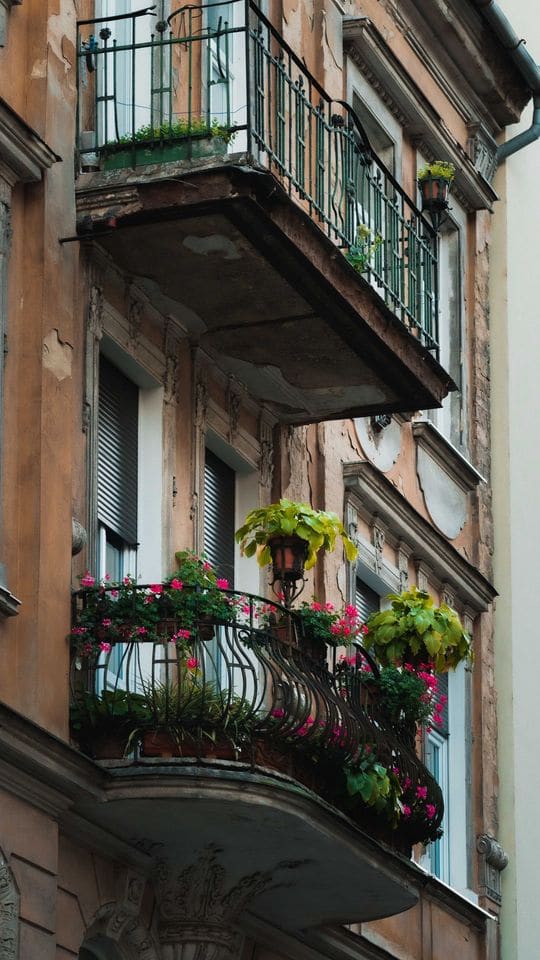
Photo: Lukas Kosc / Pexels · free stock, attributed
Bed-scale companion charts do not shrink cleanly onto a railing trough. On temperate Northern Hemisphere urban balconies (USDA zones 6–8), root volume and water rhythm decide what may share a pot — not mystical “friendship.” Hotter sites dry shared pots faster; cooler wet springs punish overcrowding with rot.
Compiled from common balcony edible-container practice.
Rules that actually scale
- One fruiting plant per appropriately sized pot (tomato, pepper, eggplant).
- Add at most a small herb if the pot is oversized for that fruiting plant alone.
- Stack height: tall crop at the back, low crop at the rim — only while light still reaches both.
- Same water needs only. Rosemary does not share a swampy lettuce trough.
- Mint always alone.
Layouts that can work
| Layout | Minimum volume | Notes |
|---|---|---|
| Compact tomato + basil at rim | 25–40 L | Basil after tomato is established; not a pest spray replacement |
| Eggplant + one rim herb | 25–30 L | Soft-tie eggplant; herb stays small |
| Lettuce under temporary shade of taller pots | Separate troughs | Short spring window only |
| Thyme + sage | Shared dryish trough | Same drought rhythm |
| Strawberry + nothing else | 10–15 L | Crowns need space and sun |
Skip stuffing marigold, lettuce, onion, and tomato into a 10 L pot because a chart said so.
Layouts to refuse
| Pairing | Why |
|---|---|
| Mint + anything | Runners colonize mix |
| Full indeterminate tomato + deep companions | Vine owns light and water |
| Carrot + heavy feeders in shallow trays | Roots compete; trough too small |
| Lavender jammed into wet vegetable tub | Wrong moisture |
For step-by-step single crops, start with tomatoes, lettuce, and kitchen herbs.
Sources
- University of Minnesota Extension — Growing vegetables in containers
- Iowa State University Extension — Container vegetable gardening
- Colorado State University Extension — Container gardens